Appearance
How to play
Learn basic play in about 3 minutes — Watch on YouTube. Tiebreak / Immortal takes a few more minutes — demo & script.
This page is for readers who want a visual pass without opening the video first. Example A — Sample setup matches the pinned YouTube demo through the 2–6 row and two draft picks. Example B — Actual game is a separate staged run that reaches Immortal. Asset folder: site/docs/public/images/how-to-play/.
Authority: edge cases, seating, simultaneous vs sequential research notes — Rules (v1.13) · Simple rules (players) (compact linear) · YouTube demo & tutorial (pinned move sequence).
PSDG in one formal pass
PSDG is a finite two-player zero-sum game. Randomness is used only for the initial public setup; after setup there are no further chance moves under the usual v1.13 table rules.
Stages (high level): Draft (alternate picks from six gray dice; each pick Twists a facing while keeping the top) → Poisoned Gift / Exchange (each player gifts one Crucible die under the duplicate-top eligibility rule) → Phase 1 scoring on Crucible tops → Tumble each Crucible die once (facing becomes new top) → Phase 2 scoring → Immortal tiebreaker if needed.
The load-bearing commitment: draft facings are fixed before Phase 1 scoring uses tops; those facings become payoff-relevant after the Tumble. A summary that tracks only visible tops can alias positions the rules distinguish—this is the same representation story as on the home page.
Gift / Exchange: the Poisoned Gift can be run simultaneous (v1.13 table default in the rules) or sequential—the YouTube tutorial calls both out on screen. Either way, once gifts resolve, the six Crucible dice look the same; only who knew what when they chose differs. Published benchmarks compare both timings (empirical snapshot, Rules NOTE). Example A is 2–6 sample teaching only; Example B films one full run through Immortal (Gift timing in the clip matches what the video explains for that take). See Note — Sequential vs simultaneous Gift when you map this page to named benchmark rows.
Two important motions: Twist and Tumble
Twist — rotate a die without changing its top, to choose which side value faces the players (the Facing Players Value in the rules).
Tumble — roll a die forward, away from the players, so the face that was facing the players becomes the new top.
These motions show up in normal play — Twist on each draft pick; Tumble once per Crucible die in The Reckoning after Phase 1 — and again in Immortal when the tiebreaker runs.
Example A — Sample setup
Use YouTube demo & script alongside these stills. Example A is not the game that finishes in Immortal—that is Example B.
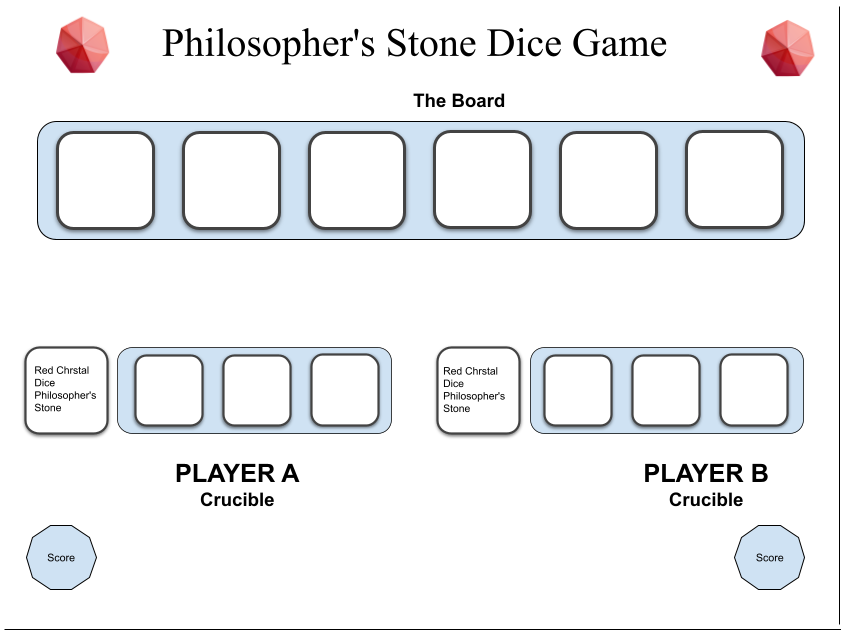
Board and Red Crystals (setup)
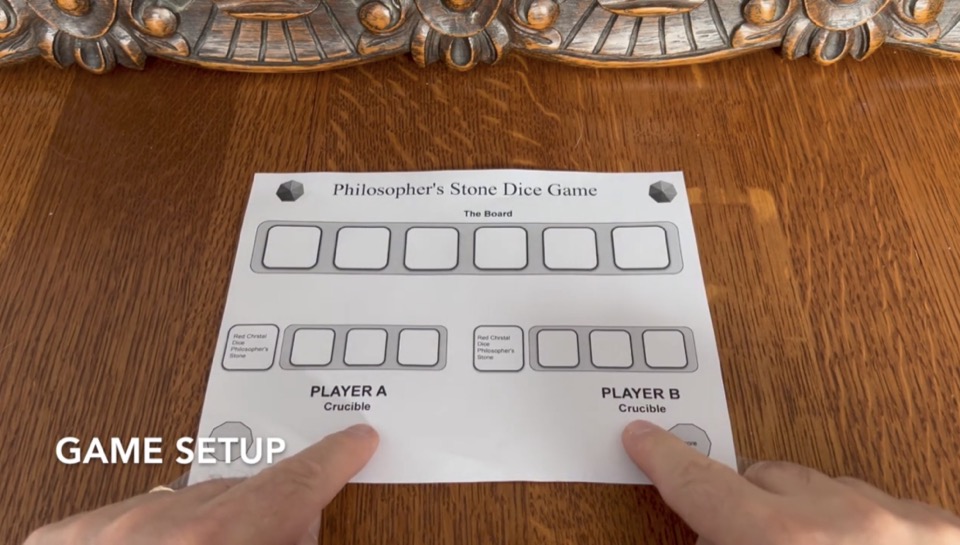
(a) Blank mat: no dice yet—shows the layout before setup rolls.
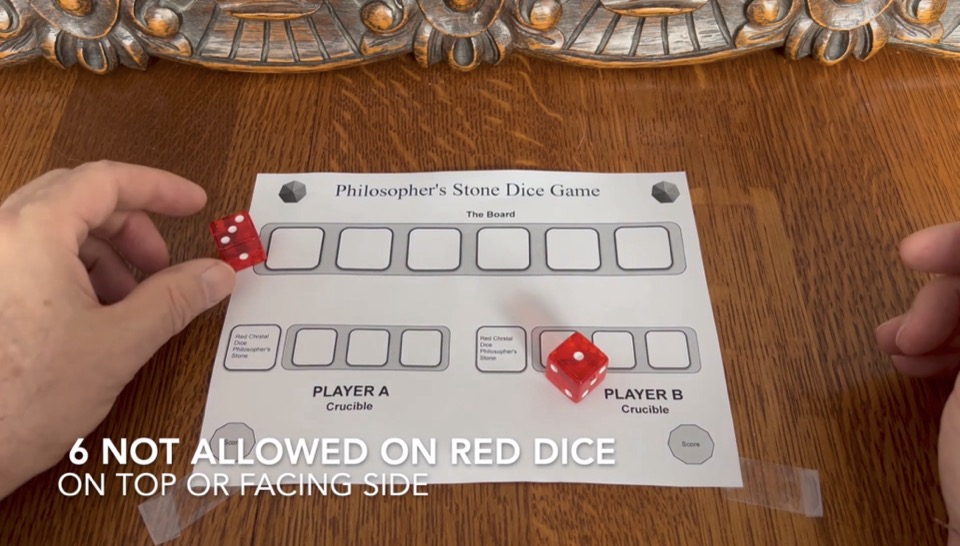
(b) Red Crystals only, right after the rolls (v1.13: Crystal top cannot be 6—reroll steps in Rules — Setting the Red Crystals).
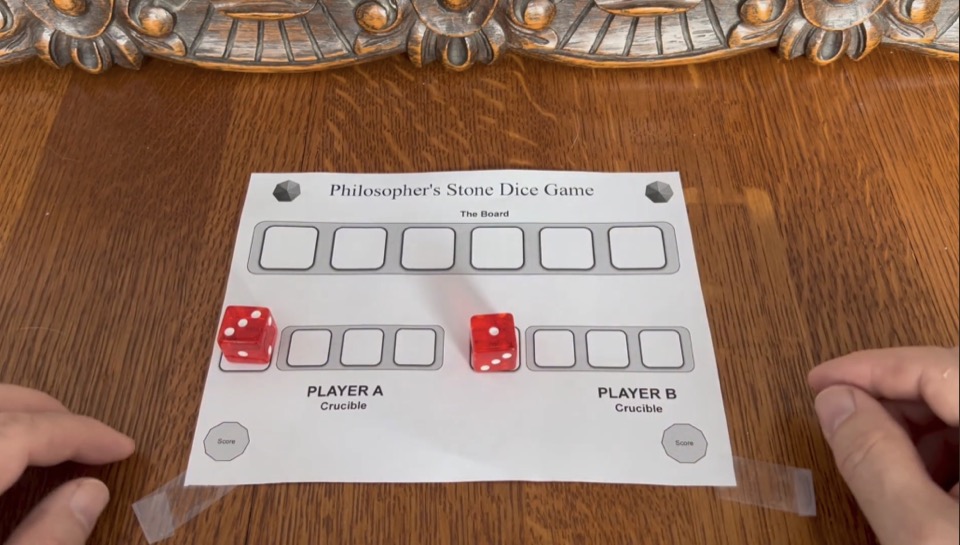
(c) Crystals in starting positions: top and Facing Players Value visible—the pair the tutorial carries into draft and Immortal.
Gray draft pool
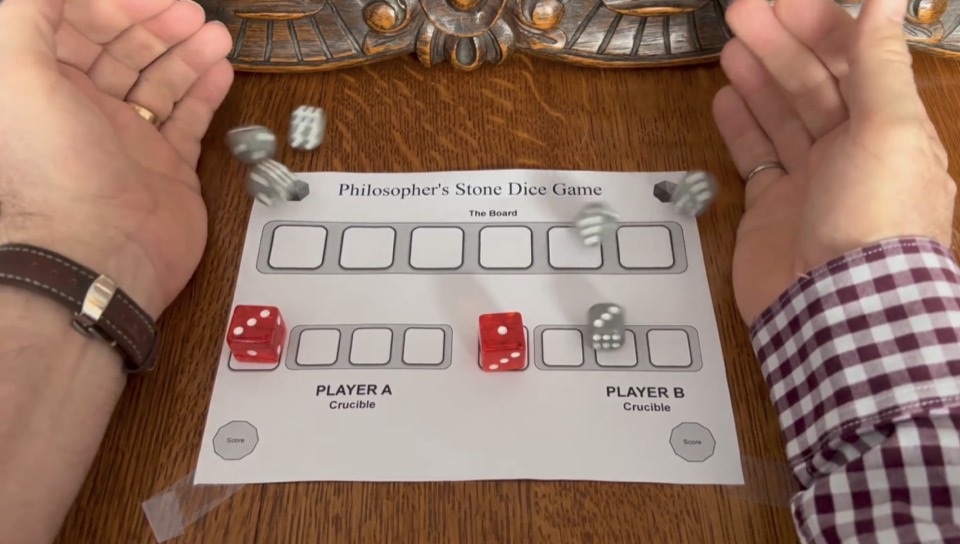
(a) All six gray dice mid-roll—the pool that fixes the scripted opening (demo — setup).
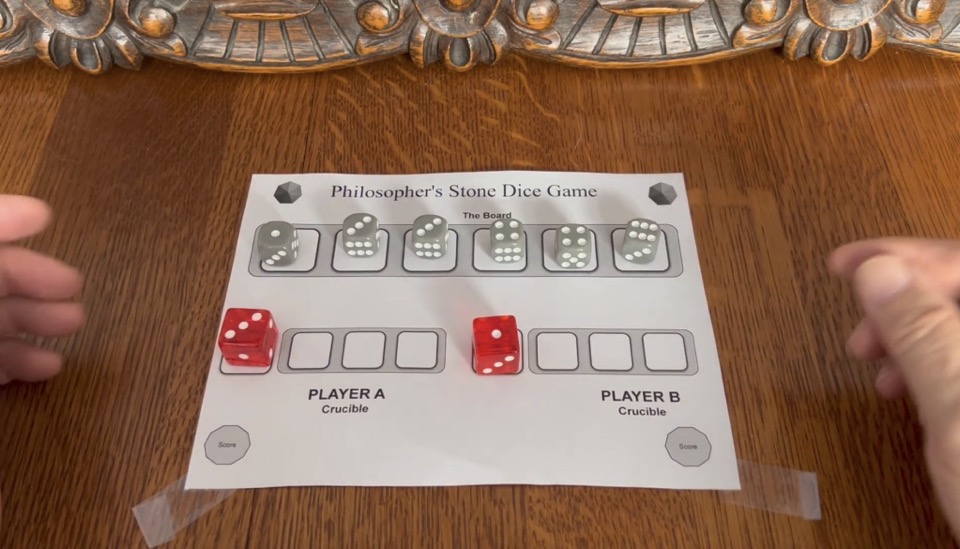
(b) Dice lined up as the draft pool (scripted tops 2, 2, 3, 4, 5, 6 left→right before picks; facings set when each die is drafted). Sample row only for the draft picks shown below—not what you ride through Example B to Immortal.
Draft — first two picks (demo 2–6 row)
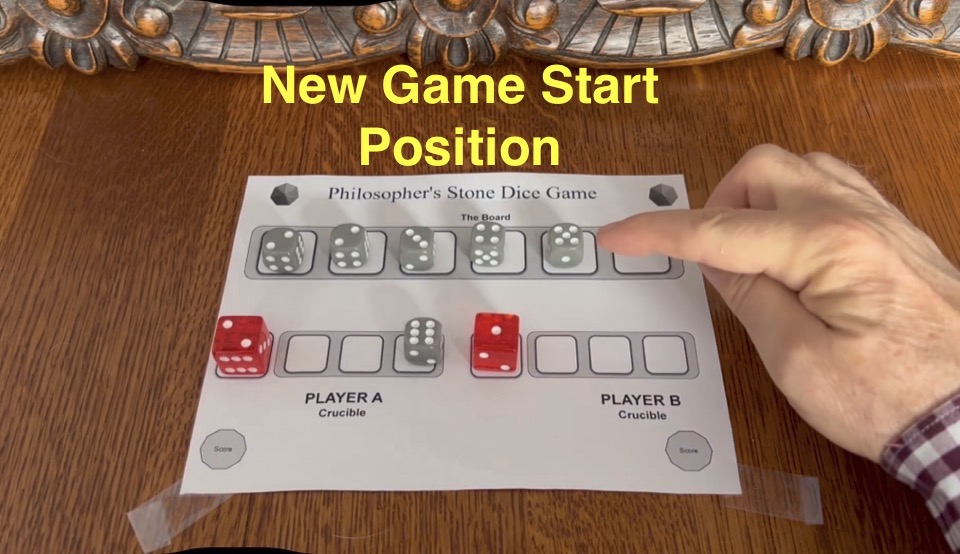
(a) A’s first pick on the 2–6 demo (draft turn 1): Twist sets Facing Players Value.
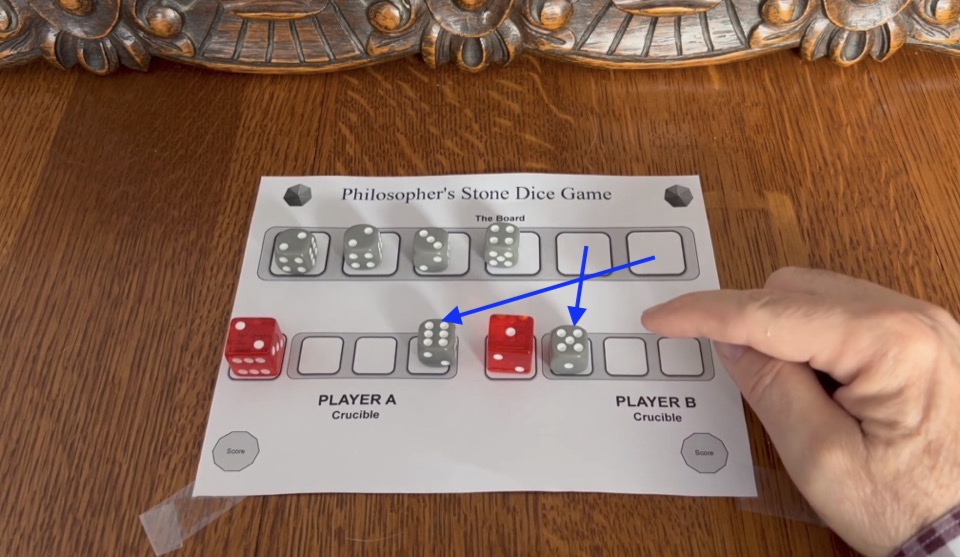
(b) B’s first pick, same demo row.
Example B — Actual game — new random setup
NOTE
Example A (mat → Crystals → demo 2–6 row → two draft picks) is demonstration only—so viewers see draft mechanics clearly.
Here: from finished draft ((c)) onward, we film a different full game (new rolls / new opening): it is staged to hit a tie after Phase 2 so Immortal fits in the tutorial. fig-03-c through fig-06-c are one continuous table session.
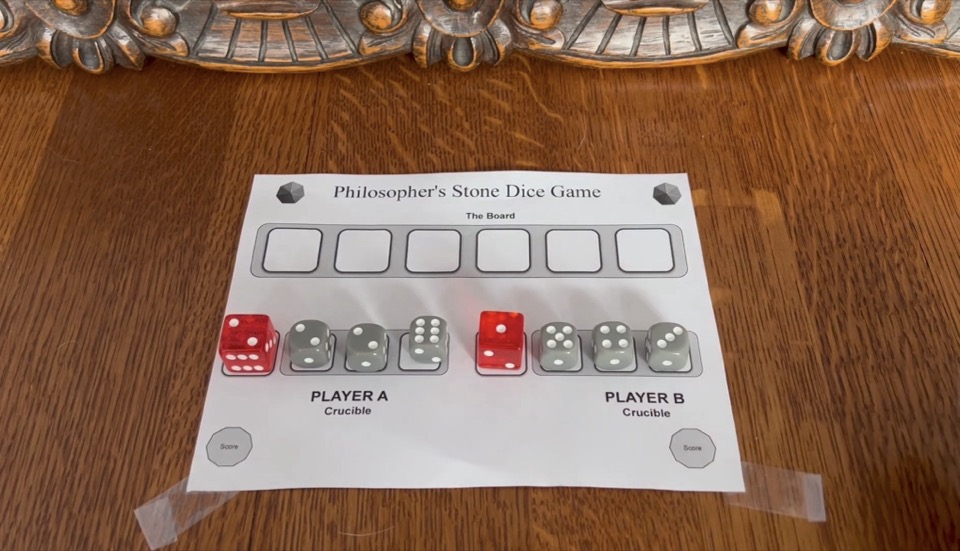
(c) Draft done on the new random opening (Poisoned Gift → Immortal follow this run).
After the Poisoned Gift (Exchange)
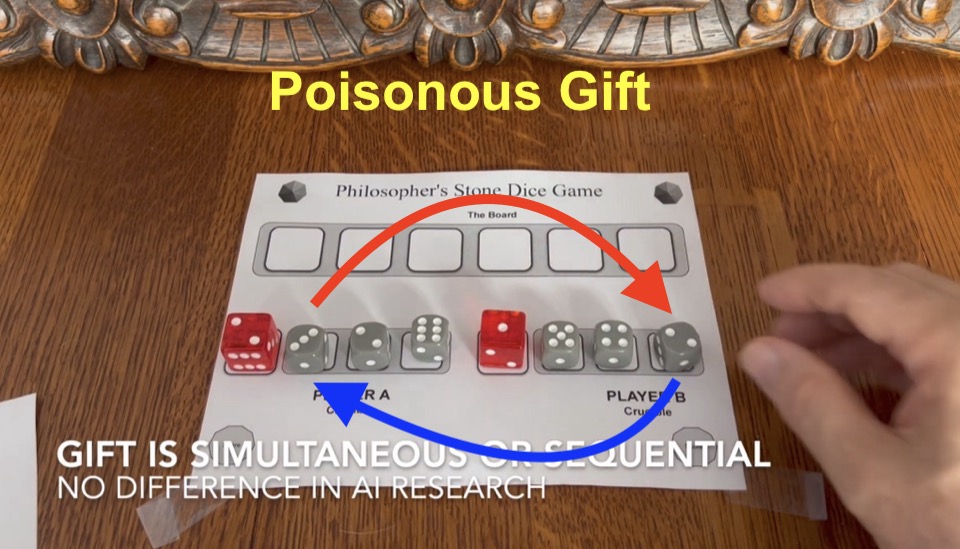
Positions after both gifts swap in: three gray dice each, including one incoming twist from the opponent. Same finished layout whether the table filmed simultaneous reveal or sequential A-then-B—only how players choose differs.
The Reckoning (Phase 1 · Tumble · Phase 2)
The Reckoning (Rules · Simple rules): Phase 1 on tops → Tumble → Phase 2; here totals tie 3–3 → Immortal. Moves: Every move.
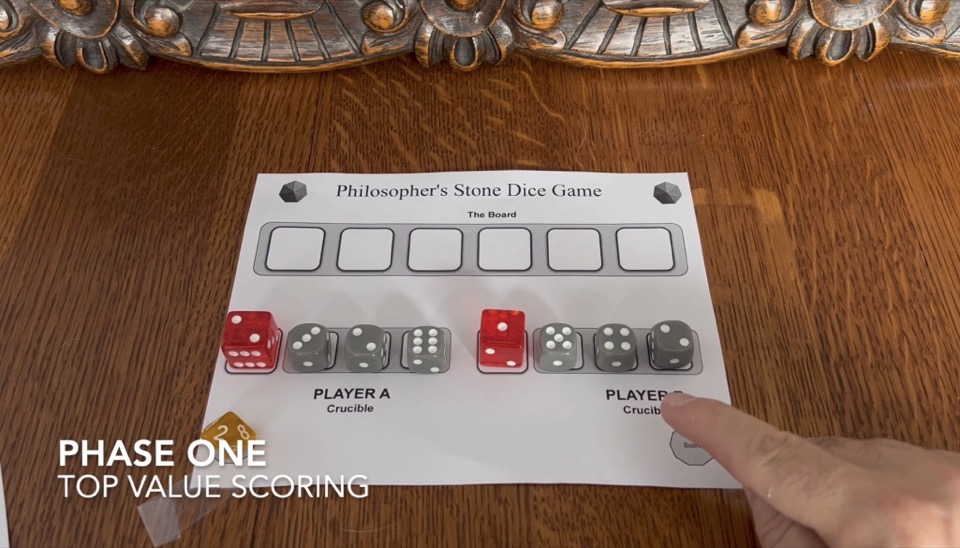
(a) Phase 1 — Gold on tops (each die: 6 or your Crystal top counts 1); still shows tie 3–3 before the Tumble.
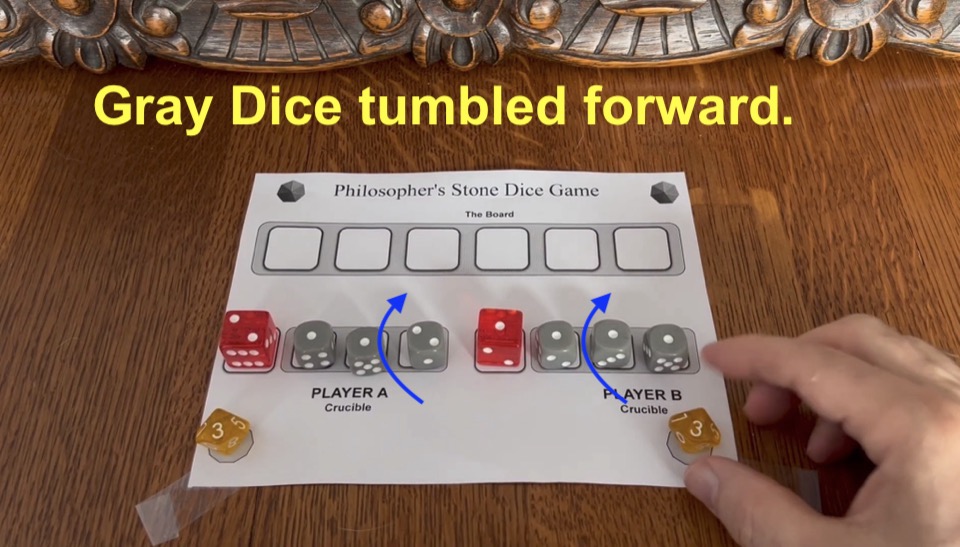
(b) Phase 2 — After Tumble, score again on the new tops (former facings); still tied 3–3 combined with Phase 1 in the scripted line—so the game enters Immortal.
Immortal (tie tumbles)
Crucible dice frozen; Crystals: three tie‑tumbles. Files fig-06-a … fig-06-c.
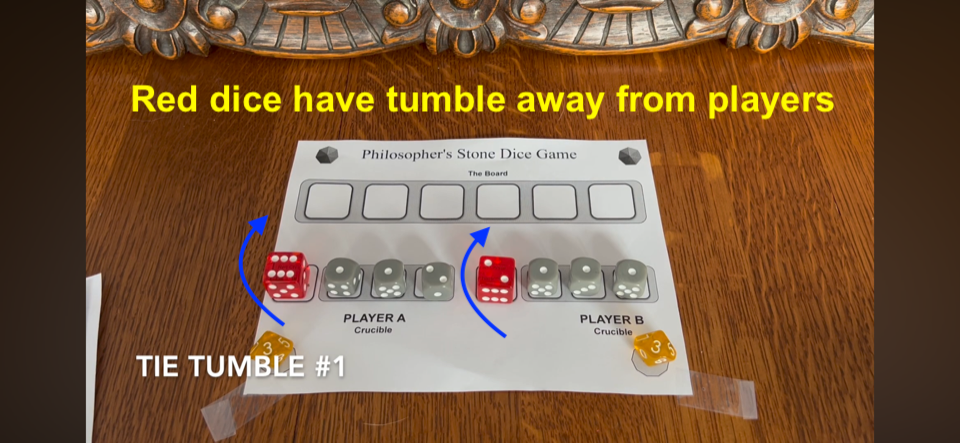
(a) Tie tumble 1 — Crystals tumbled forward; re-score frozen grays → tied 3–3 in this frame (align with on-screen tally in the video).
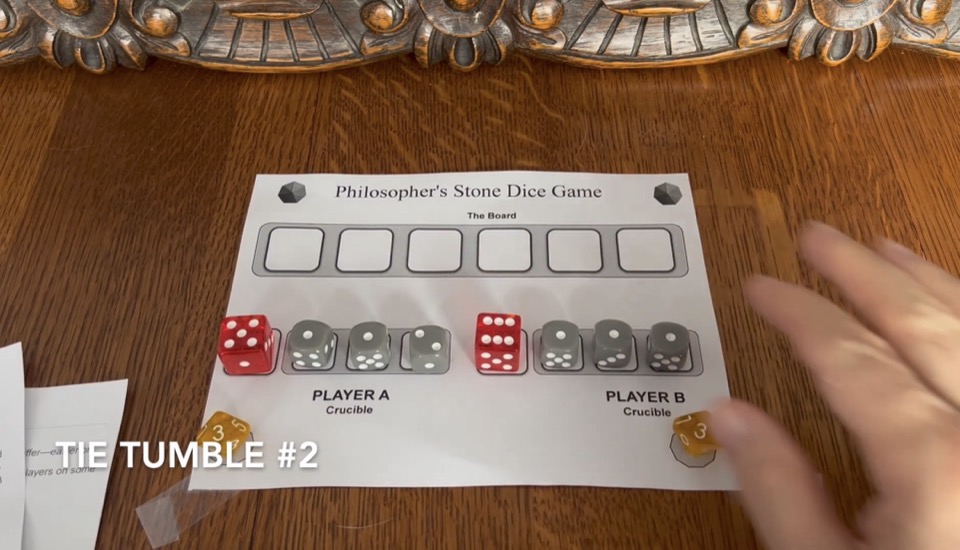
(b) Tie tumble 2 — flip each Crystal; re-score → still tied 3–3.
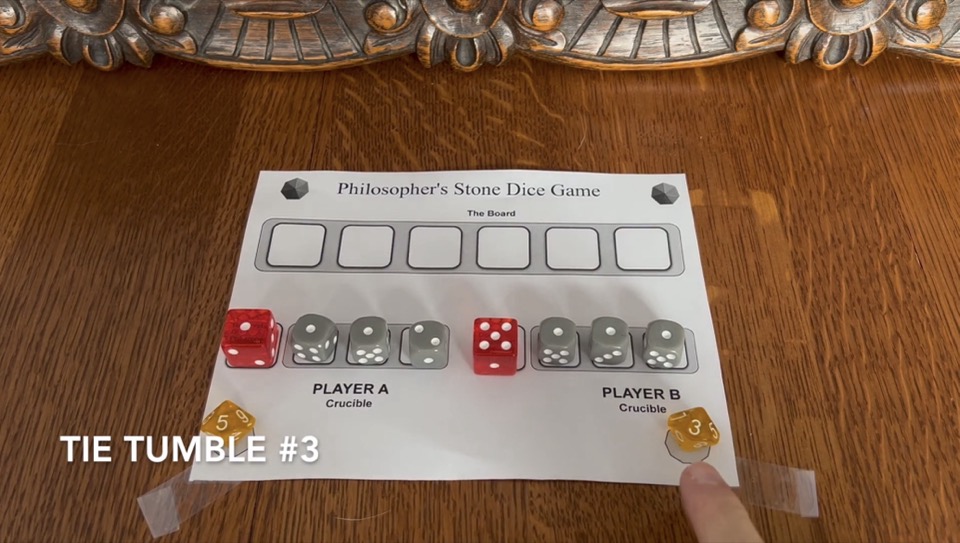
(c) Tie tumble 3 — tumble Crystals again; re-score → decisive outcome (5–3 after the third tie tumble in your stills — A wins under the scripted line on the demo page).
Summary (whole game): Setup → draft (twists) → Poisoned Gift → Phase 1 & 2 (Tumble between) → Immortal if tied. (fig-03-c–fig-06-c = the actual game staged for tie → Immortal.)
Note — Sequential vs simultaneous Gift
Table play: simultaneous and sequential Exchange are both valid—see the video and Rules. This page treats the post‑swap tableau the same either way (see Example B — After the Poisoned Gift).
Benchmarks: numbered rows in the snapshot are labeled sequential or simultaneous static Exchange—use the label on the row, not a guess from a still. Do not silently mix information timing from one protocol into analysis of a row from the other.
Stills: optional second set (e.g. fig-08 onward) if you add frames that focus on Gift choice under one protocol; not required for the 2–6 sample in Example A.
After the walkthrough
- Rules (v1.13) — full canon.
- Simple rules (players) — short linear reference.
- Home — research context and benchmark snapshot.
- Playmat — printable (
PSDG-playmat.png).